Disclosure: As an Amazon Associate I earn from qualifying purchases. This site contains affiliate links.

Apple Vision Pro in 2026: One Year Later Review

Local LLMs on NVIDIA Spark / ASUS GX10
Apple Vision Pro in 2026: One Year Later Review
When Apple Vision Pro launched in February 2024 at $3,499, I called it the most impressive piece of technology I'd ever used — and the hardest to recommend to anyone. Two years later, after a price drop to $2,999, visionOS 3, hundreds of native apps, and twelve months of integrating it into my actual workflow, I have a much more nuanced picture.
This isn't a first-impressions review. This is what happens when the honeymoon period ends and you try to use spatial computing as a real productivity tool, every day, for a year.
For a technical overview of the device and its capabilities, Grokipedia has a detailed breakdown.
What's Changed Since Launch
visionOS 3: The Software That Should Have Shipped
The biggest transformation isn't the hardware — it's visionOS 3, released in fall 2025. The original visionOS was functional but felt like a tech demo. visionOS 3 feels like a real operating system. The major improvements:
Multi-window management: You can now place up to twelve windows in your space (up from the original limit), resize them with precision, and save window arrangements as "Spaces" that you can switch between. I have a "Coding" space with three large windows (editor, terminal, browser) and a "Writing" space with a single large window and a reference panel.
Mac Virtual Display improvements: The Mac Virtual Display — where your MacBook screen appears as a virtual window — has gone from a neat trick to a genuine productivity feature. The resolution has increased, the latency has dropped to the point where I can't perceive it, and you can now use multiple virtual Mac displays simultaneously.
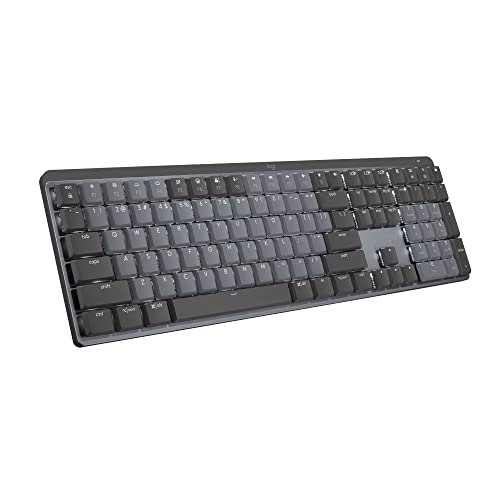
Keyboard tracking: visionOS 3 added the ability to see and use your physical keyboard in passthrough mode. It tracks compatible Bluetooth keyboards (the Logitech MX Keys S works perfectly) and displays a transparent overlay of the keys. This was the single biggest quality-of-life improvement for productivity use.
Performance and battery: General performance has improved significantly through software optimization. Animations are smoother, app switching is faster, and the eye-tracking accuracy has been refined through machine learning updates.
What It's Like Using Vision Pro Daily
The Good
Infinite screen real estate. This is the killer feature, and after a year it hasn't gotten old. I regularly work with three to five large windows positioned around me — a code editor front and center, a terminal to the left, documentation to the right, and Slack floating below. The spatial arrangement maps to my mental model of my workflow in a way that multiple physical monitors can't quite replicate.
Focus without distraction. When I'm wearing the Vision Pro with a focused window arrangement, there's nothing else to look at. No notification badge on a different screen catching my eye. No browser tab calling to me. Just the work. This sounds trivial but it measurably improved my deep work sessions.
Travel workstation. On flights and in hotel rooms, the Vision Pro is genuinely transformative. Instead of squinting at a 13-inch laptop screen on a tray table, I have multiple large windows in a virtual environment of my choice. I wrote significant portions of several blog articles during flights this year.

The Not-So-Good
Comfort remains the Achilles heel. The Vision Pro weighs 600-650 grams depending on the strap configuration. After 90 minutes, I notice the weight on my face. After 2 hours, I want to take it off. I've never done a continuous 4-hour session. Compare this to wearing headphones all day — the weight difference is dramatic.
The dual-loop headband helps, but it adds bulk and looks less clean. The solo knit band is more comfortable for short sessions. Neither is as comfortable as simply not wearing anything on your face.
Eye strain is real. The displays are excellent — micro-OLED with 23 million pixels — but they're inches from your eyes. After extended use, my eyes feel fatigued in a way they don't from a physical monitor at 24 inches. I've settled into a pattern of 60-90 minute Vision Pro sessions followed by breaks, rather than all-day wear.
The ecosystem is still thin for productivity. Yes, there are now hundreds of native visionOS apps. But the apps I use most for work — VS Code, my preferred terminal emulator, specific Figma features — either don't have native visionOS versions or run as iPad apps in compatibility mode. The Mac Virtual Display bridges this gap, but it adds a layer of indirection.
Isolation. Wearing a headset separates you from the people around you. Even with EyeSight (the external display that shows your eyes), interaction with family or coworkers requires removing the device or using passthrough mode. This is a fundamental limitation of face-mounted computing that software can't fully solve.
The Price Drop: $2,999 in 2026
Apple dropped the Vision Pro price to $2,999 in late 2025, absorbing the cost reduction from M2 chip manufacturing maturity and component sourcing improvements. A $500 savings is meaningful, but let's be honest: this is still a $3,000 device.
Is $2,999 Worth It?
For developers: Maybe. If you travel frequently and value a portable multi-monitor setup, the Vision Pro pays for itself in productivity over a year or two. If you primarily work at a desk with physical monitors, it's a luxury.
For content creators: It's a fascinating creative tool, but the content creation workflow (shooting spatial video, editing in visionOS) is still immature. The audience for spatial content remains small.
For general consumers: Not yet. At $2,999, the Vision Pro is still an enthusiast/early-adopter device. The experience is remarkable, but the comfort limitations and content library don't justify the price for casual use.
My honest recommendation: if you can afford it without stress and you're genuinely curious about spatial computing, buy one. If $3,000 is a significant purchase for you, wait for Vision Pro 2 or a potential "Vision" (non-Pro) model.
The Developer Ecosystem
The visionOS developer ecosystem has grown steadily but not explosively. As of early 2026, here's the state of play:
| Category | Notable Apps | Maturity |
|---|---|---|
| Productivity | Microsoft 365, Fantastical, Craft | Good |
| Communication | Zoom, Teams, FaceTime | Good |
| Entertainment | Disney+, Apple TV+, Max | Very Good |
| Gaming | Several native titles + Apple Arcade | Growing |
| Development | Xcode (Mac Virtual Display), Swift Playgrounds | Basic |
| Design | Figma (iPad), Procreate (iPad), Shapr3D | Mixed |
| AI Tools | ChatGPT, Claude (Safari) | Basic |
The biggest gap is native developer tooling. There's no native VS Code, no native terminal with full feature parity, and no native Git client that takes advantage of spatial computing. Developers are largely working through Mac Virtual Display, which works well but doesn't leverage the spatial medium.
That said, the apps that are native to visionOS are genuinely compelling. The 3D modeling and design tools (Shapr3D, Reality Composer Pro) demonstrate what spatial computing can uniquely enable. And the entertainment experience — watching a movie on a virtual IMAX-sized screen in a simulated theater — remains one of the most impressive consumer technology experiences available.
For the AI tools ecosystem on Vision Pro and elsewhere, check out our best AI productivity tools guide and Claude vs ChatGPT vs Gemini comparison.
Vision Pro vs. Physical Monitors: An Honest Comparison
After a year, here's my honest comparison between Vision Pro and a traditional multi-monitor desk setup.
| Factor | Vision Pro | Physical Monitors |
|---|---|---|
| Screen real estate | Unlimited | Limited by desk space |
| Resolution/clarity | Excellent (but close to eyes) | Excellent (at comfortable distance) |
| Comfort (4+ hours) | Poor | Excellent |
| Portability | Excellent | None |
| Eye strain | Moderate | Low |
| Social awareness | Limited | Full |
| Setup time | 30 seconds | Already there |
| Cost | $2,999 | $400-$800 for great monitors |
For desk work at home, I still prefer my ASUS ProArt PA279CRV 4K monitor with a LG 27UN850-W as a secondary display. The comfort factor alone makes physical monitors the winner for 8-hour workdays. But for travel, focused 60-90 minute work sessions, and specific creative tasks, the Vision Pro is genuinely superior.
For more on the traditional monitor setup, check out our best monitors for coding.
What's Coming: Vision Pro 2
Apple hasn't officially announced Vision Pro 2, but the supply chain leaks and analyst reports paint a consistent picture:
Expected changes:
- M5 chip: Significantly more processing power for complex spatial environments and AI workloads
- Lighter weight: Targeting 450-500 grams (down from 600-650), which would dramatically improve comfort
- Wider field of view: Rumored 120-degree FOV (up from ~100 degrees)
- Improved passthrough cameras: Better low-light performance and reduced latency for a more natural mixed reality experience
- Lower price: Potentially $2,499 for the Pro model, with a non-Pro "Vision" model at $1,499-$1,999
Expected timeline: Late 2026 or early 2027 for Vision Pro 2. The non-Pro "Vision" could arrive as early as fall 2026.
If the weight reduction and price drop materialize, Vision Pro 2 could be the version that moves spatial computing from early-adopter curiosity to genuine mainstream productivity tool.
My Daily Workflow: When I Wear It and When I Don't
After twelve months of experimentation, I've settled into a pattern:
Vision Pro ON:
- Focused writing sessions (60-90 minutes)
- Travel — airports, flights, hotels
- Reviewing spatial video and 3D content
- Immersive entertainment (movies, concerts)
- Quick focused work when I'm away from my desk
Vision Pro OFF (physical monitors):
- Long coding sessions (2+ hours)
- Video calls (colleagues prefer seeing my actual face)
- Collaborative work where I need to talk to someone in the room
- Any session where I expect to work for more than 90 minutes continuously
The Vision Pro hasn't replaced my desk setup — it's become a complementary tool that I reach for in specific situations. That's okay. The laptop didn't replace the desktop for everyone either. Different tools for different contexts.
Spatial Computing: Is It Ready for Mainstream?
Honest answer: not yet, but the trajectory is clear.
The technology works. The experience is genuinely impressive. The software ecosystem is growing. But three barriers remain before spatial computing goes mainstream:
-
Comfort. Wearing something on your face for hours is fundamentally different from wearing headphones or glasses. Until the weight drops below 400 grams and the form factor approaches normal eyeglasses, mainstream adoption will be limited.
-
Social acceptance. Wearing a headset in public is still socially awkward. AR glasses (like the rumored Apple Glasses or Meta Orion) could solve this, but full mixed-reality headsets won't.
-
Price. $2,999 is three to five times what most people spend on their primary computer. A sub-$1,000 device with 80% of the capability would change the equation dramatically.
Apple's long game is clear: the Vision Pro is a developer kit and luxury product that funds the R&D for eventual mainstream AR glasses. We're in the "iPhone 1" era of spatial computing — impressive but limited, expensive but directional.
The Bottom Line
Apple Vision Pro in February 2026 is a significantly better product than what launched two years ago. visionOS 3 transformed it from a tech demo into a capable productivity tool. The app ecosystem, while not yet comprehensive, covers most essential use cases. And the $2,999 price point, while still premium, is more palatable than the original $3,499.
Buy it if: You're a developer or creative professional who travels frequently, you want to experience the cutting edge of computing, and $2,999 won't strain your budget.
Wait if: You primarily work at a desk, comfort during long sessions is a priority, or you're hoping for a more affordable option. Vision Pro 2 or a non-Pro model could address all of these concerns.
Skip it if: You're looking for a gaming headset, you want a device for all-day wear, or you need a large native app ecosystem for your specific workflow.
The future of spatial computing is inevitable. Whether you jump in now or wait for the next generation is a question of timing and budget, not direction.
Are you using a Vision Pro for work? I'd love to hear about your setup on X (@wikiwayne) — the spatial computing community is still small enough that we all learn from each other.
Recommended Gear
These are products I personally recommend. Click to view on Amazon.
Logitech MX Keys S Wireless — Great pick for anyone following this guide.
Logitech MX Mechanical Mini — Great pick for anyone following this guide.
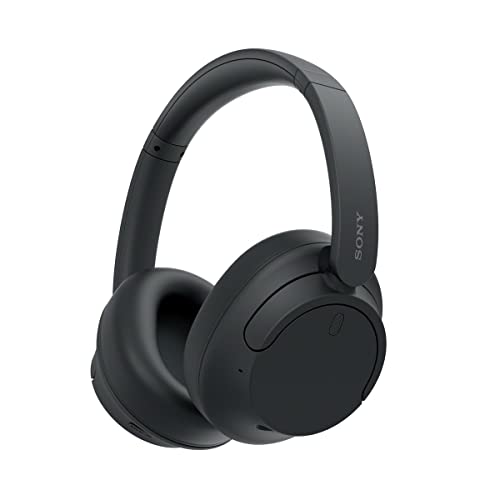
Sony WH-1000XM5 — Great pick for anyone following this guide.
 ASUS ProArt PA279CRV 27" 4K — Great pick for anyone following this guide.
 Samsung T7 Portable SSD 1TB — Great pick for anyone following this guide.
 AI Engineering by Chip Huyen — Great pick for anyone following this guide.
This article contains affiliate links. As an Amazon Associate I earn from qualifying purchases. See our full disclosure.
Affiliate Disclosure: As an Amazon Associate I earn from qualifying purchases. This site contains affiliate links.