Disclosure: As an Amazon Associate I earn from qualifying purchases. This site contains affiliate links.

Best AI Productivity Tools in 2026: Work Smarter, Not Harder

Local LLMs on NVIDIA Spark / ASUS GX10
Best AI Productivity Tools in 2026: Work Smarter, Not Harder
I'll be honest -- I was skeptical about AI productivity tools for a long time. Another app that promises to "revolutionize your workflow" usually just adds another tab to manage. But something shifted in 2025. The tools got actually smart. Not "keyword matching" smart, but "understands what I'm trying to do and handles it before I ask" smart.
The result? I've clawed back roughly 8-10 hours per week. Not through any single tool, but through a stack of AI-powered tools that each handle one thing exceptionally well. Here's the setup I've landed on after testing dozens of options.
Why AI Productivity Tools Are Different Now
The productivity software market has been promising AI for years, but most of it was glorified automation -- if-this-then-that rules with an "AI" label. What changed in 2025-2026 is that machine learning models became good enough to handle the ambiguous tasks that automation couldn't touch.
Scheduling a meeting used to require back-and-forth emails. Now AI reads the context, checks everyone's calendars, finds optimal times, and sends the invite. Taking meeting notes used to mean someone couldn't fully participate. Now AI captures, summarizes, and distributes action items automatically. Email triage used to eat an hour every morning. Now AI pre-sorts, drafts replies, and flags what actually needs your attention.
The compound effect of these improvements is real. A McKinsey analysis found that knowledge workers spend 60% of their time on "work about work" -- scheduling, status updates, information searching, and communication overhead. AI productivity tools target exactly that 60%.

Top 7 AI Productivity Tools in 2026
1. Notion AI
The knowledge hub. Notion was already one of the most versatile workspace tools, and the AI layer transforms it from a note-taking app into an intelligent knowledge system. Ask questions about your entire workspace, generate content from your notes, and let AI organize information that would take hours to sort manually.
What sets it apart: Context. Notion AI has access to everything in your workspace -- every document, database, wiki page, and meeting note. When you ask it to draft a project brief, it pulls from relevant existing content. When you search for information, it understands your organizational structure and returns contextually relevant results.
Real workflow impact: I use Notion as my second brain for WikiWayne. Notion AI lets me query my research notes ("What did I find about Kling's pricing?"), generate first drafts from my outlines, and automatically create action items from meeting notes. Estimated time saved: 3-4 hours/week.
Pricing:
- Notion AI add-on: $10/member/month
- Included in some enterprise plans
2. Otter.ai
The meeting companion. Otter.ai has become the default meeting transcription tool for a reason -- it's frighteningly accurate and the AI features go well beyond simple transcription. It joins your meetings (Zoom, Google Meet, Microsoft Teams), transcribes in real time, identifies speakers, and generates summaries with action items.
What sets it apart: The automated workflow. Otter joins your calendar meetings automatically, transcribes everything, generates a summary and action items, and distributes them to participants -- all without you doing anything. The new OtterPilot feature can even answer questions in the meeting on your behalf based on your notes and documents.
Real workflow impact: Before Otter, I spent 20-30 minutes after every meeting writing up notes and action items. Now it's zero. Otter's summaries are accurate enough that I can skip meetings I'm not essential for and catch up from the transcript. Estimated time saved: 2-3 hours/week.
Pricing:
- Free tier (300 minutes/month)
- Pro: $16.99/month (1,200 minutes)
- Business: $30/user/month (6,000 minutes)
- Enterprise: Custom
3. Reclaim.ai
The calendar optimizer. Reclaim.ai is the most sophisticated AI scheduling tool I've used. It doesn't just find meeting times -- it actively manages your entire calendar to protect focus time, schedule habits (exercise, lunch, planning sessions), and balance your workload across the week.
What sets it apart: Intelligent time defense. Reclaim creates "smart events" that automatically adjust based on your schedule pressure. If a quiet week allows a 2-hour focus block, it expands. If meetings pile up, it compresses to a 1-hour minimum. It also handles scheduling links, team coordination, and priority-based task scheduling from your task manager.
Real workflow impact: Before Reclaim, I'd start every Monday manually blocking focus time, and by Tuesday it had all been eaten by meeting requests. Now Reclaim defends my deep work time automatically and only yields it when calendar pressure is genuinely high. Estimated time saved: 1-2 hours/week in scheduling overhead, plus significantly more productive use of existing time.
Pricing:
- Free tier (basic scheduling)
- Starter: $10/user/month
- Business: $15/user/month
- Enterprise: Custom
4. Motion
The AI project manager. Motion combines calendar management, task management, and project planning into a single AI-powered platform. Tell it your tasks, deadlines, and priorities, and it automatically builds your schedule -- deciding what you should work on, when, and for how long.
What sets it apart: Autonomous scheduling. Motion doesn't just suggest a schedule -- it makes one. Every task gets a time slot based on priority, deadline, and your working patterns. When a new meeting appears or a task takes longer than expected, Motion automatically reshuffles everything. It's like having a personal assistant who manages your calendar with an understanding of your priorities.
Real workflow impact: Motion eliminated the daily question of "what should I work on next?" Having my tasks automatically scheduled into specific time blocks reduced my context-switching and increased my completion rate significantly. Estimated time saved: 1-2 hours/week in planning, plus better execution.
Pricing:
- Individual: $19/month
- Team: $12/user/month
- Enterprise: Custom
5. Clockwise
The team calendar intelligence. Clockwise focuses specifically on team calendars, using AI to optimize meeting schedules across an organization. It minimizes fragmented schedules, batches meetings together, and creates protected focus time for everyone -- not just individuals.
What sets it apart: The team-level optimization. While Reclaim and Motion work great for individuals, Clockwise shines when an entire team uses it. The AI considers everyone's preferences, meetings, and focus time needs simultaneously, finding schedules that work for the whole organization rather than optimizing each person independently.
Real workflow impact: Best for teams. When I consulted with a 15-person team that adopted Clockwise, their average focus time blocks increased from 47 minutes to 2.1 hours. Meeting fragmentation dropped dramatically. Individual impact depends on team adoption.
Pricing:
- Free tier (basic features)
- Teams: $6.75/user/month
- Business: $11.50/user/month
- Enterprise: Custom
6. Superhuman
The email speed demon. Superhuman has been the premium email client for years, and the AI features have taken it from "fast email" to "AI email assistant." It drafts replies in your voice, summarizes long threads, triages your inbox by priority, and helps you reach Inbox Zero faster than any other tool.
What sets it apart: Speed and AI quality. Superhuman's AI doesn't just generate generic replies -- it learns your writing style, tone, and common response patterns. The "Instant Reply" suggestions are often good enough to send with one click. The triage feature intelligently separates truly important emails from noise, and the "catch-up" summary lets you process 50 emails in the time it would take to read 10.
Real workflow impact: Email used to be my first hour every morning. With Superhuman's AI triage and instant replies, it's now 15-20 minutes. The AI drafts handle 60-70% of my replies, with me editing maybe 30% of those before sending. Estimated time saved: 3-4 hours/week.
Pricing:
- Starter: $25/month
- Growth: $30/month (team features)
- Enterprise: Custom
7. Mem.ai
The AI-native notebook. Mem takes a radically different approach to note-taking: instead of organizing notes into folders and hierarchies, you just write, and the AI organizes everything through relationships, tags, and semantic connections. It's like having a personal knowledge graph that gets smarter the more you use it.
What sets it apart: Zero-effort organization. In Notion, you decide where a note goes. In Mem, you just create it and the AI figures out how it relates to everything else. The "Related" feature surfaces relevant notes you forgot you had, and the AI chat lets you query your entire knowledge base conversationally. For researchers and writers who generate lots of unstructured notes, this is transformative.
Real workflow impact: Mem captures all my fleeting thoughts, article ideas, and research snippets. The AI surfacing related notes during writing sessions has directly improved my content -- connections I wouldn't have made manually appear automatically. Estimated time saved: 1-2 hours/week in information retrieval.
Pricing:
- Free tier
- Mem Plus: $14.99/month
- Mem Teams: $19.99/user/month
Head-to-Head Comparison
| Feature | Notion AI | Otter.ai | Reclaim.ai | Motion | Clockwise | Superhuman | Mem.ai |
|---|---|---|---|---|---|---|---|
| Primary Use | Knowledge | Meetings | Calendar | Tasks + Cal | Team Cal | Notes | |
| AI Quality | Excellent | Excellent | Very Good | Very Good | Good | Excellent | Very Good |
| Team Features | Excellent | Good | Good | Very Good | Excellent | Good | Good |
| Learning Curve | Moderate | Low | Low | Low | Low | Low | Low |
| Integrations | Extensive | Zoom/Meet/Teams | Google/Outlook | 4,000+ | Google/Outlook | Gmail/Outlook | Zapier |
| Mobile App | Yes | Yes | Yes | Yes | Yes | Yes | Yes |
| Free Tier | No | Yes | Yes | No | Yes | No | Yes |
| Starting Price | $10/mo | Free/$16.99 | Free/$10 | $19/mo | Free/$6.75 | $25/mo | Free/$14.99 |
My AI Productivity Stack (And What It Costs)
Here's exactly what I use and what it costs per month:
| Tool | Purpose | Monthly Cost |
|---|---|---|
| Notion AI | Knowledge base, writing, project management | $10 |
| Otter.ai Pro | Meeting transcription and summaries | $16.99 |
| Reclaim.ai Starter | Calendar optimization and focus time | $10 |
| Superhuman Growth | Email management and triage | $30 |
| Total | $66.99/month |
That's roughly $67/month for an estimated 8-10 hours saved per week. At any reasonable hourly rate, the ROI is obvious. Your stack will differ based on your role -- a salesperson might swap Notion for a CRM tool, a manager might add Clockwise for team optimization.
How to Build Your Own AI Productivity Stack
Step 1: Identify your biggest time sinks. Track your time for a week. Where do you spend the most time on "work about work"? That's where AI tools will have the highest impact.
Step 2: Start with one tool. Don't adopt everything at once. Pick the tool that addresses your single biggest time sink, use it for a month, and measure the impact before adding more.
Step 3: Prioritize integration. Tools that connect to your existing workflow (calendar, email, task manager) deliver value faster than tools that require a new workflow. Reclaim works because it sits on top of Google Calendar. Otter works because it joins your existing meetings.
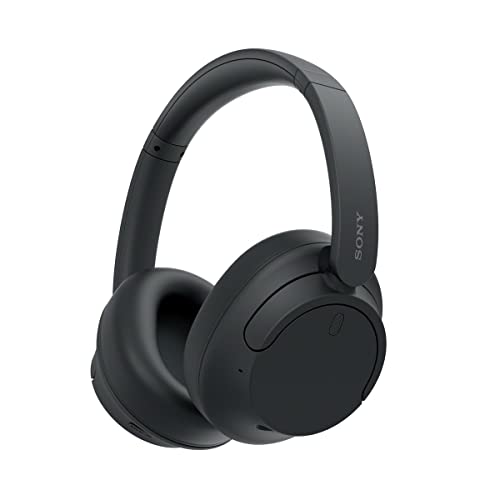
Step 4: Invest in your physical setup. AI tools amplify your productivity, but your physical environment sets the baseline. A quality keyboard like the Logitech MX Keys S and noise-canceling headphones like the Sony WH-1000XM5 remove physical friction that no software can fix. Check out my home office setup guide for the full breakdown.
For a broader view of how AI tools are changing workflows, see my guide to AI tools for small business and the best AI writing assistants.
FAQs
Are AI productivity tools worth the cost?
For most knowledge workers, yes. If a $10-30/month tool saves you 2+ hours per week, the math works out immediately. The key is choosing tools that address your actual bottlenecks rather than adopting tools because they're trendy.
Which AI productivity tool should I try first?
If meetings eat your day, start with Otter.ai (free tier available). If email is your bottleneck, try Superhuman. If you struggle with scheduling and focus time, Reclaim.ai's free tier is an easy starting point.
Do these tools work with Microsoft 365 or just Google Workspace?
Most support both ecosystems, though Google integration is typically more mature. Otter.ai works with Teams and Zoom. Superhuman supports Outlook. Reclaim and Clockwise support both Google Calendar and Outlook. Check each tool's integration page for specifics.
Are my notes and emails safe with these AI tools?
All tools listed here offer enterprise-grade security with SOC 2 compliance. However, your data does pass through their servers for AI processing. If your organization has strict data residency requirements, check each vendor's data processing policies and consider whether on-premise options are available.
The Bottom Line
AI productivity tools in 2026 aren't about doing more work -- they're about spending less time on the overhead that surrounds actual work. The tools I've outlined each target a specific productivity drain: meetings, email, scheduling, note-taking, knowledge management.
The compound effect of using three or four of these tools together is substantial. You reclaim hours that were previously lost to administrative overhead and redirect them toward the creative, strategic, and interpersonal work that actually moves the needle.
Start with one tool. Measure the impact. Add more as needed. The goal isn't to have the most sophisticated tech stack -- it's to free up time for the work that matters.
What's your AI productivity setup? Which tool has had the biggest impact on your workflow? Share your stack on X (@wikiwayne) -- I'm always looking for tools I might have missed.
Recommended Gear
These are products I personally recommend. Click to view on Amazon.
Logitech MX Keys S Wireless — Great pick for anyone following this guide.
Sony WH-1000XM5 — Great pick for anyone following this guide.
 ASUS ProArt PA279CRV 27" 4K — Great pick for anyone following this guide.
 LG 27UN850-W 4K UHD — Great pick for anyone following this guide.
 Samsung T7 Portable SSD 1TB — Great pick for anyone following this guide.
 Clean Code by Robert C. Martin — Great pick for anyone following this guide.
This article contains affiliate links. As an Amazon Associate I earn from qualifying purchases. See our full disclosure.
Affiliate Disclosure: As an Amazon Associate I earn from qualifying purchases. This site contains affiliate links.