Disclosure: As an Amazon Associate I earn from qualifying purchases. This site contains affiliate links.

Best AI Music Generators in 2026: Create Royalty-Free Music

Local LLMs on NVIDIA Spark / ASUS GX10
Best AI Music Generators in 2026: Create Royalty-Free Music
The first time I used Suno to generate a full song from a text prompt, I sat in stunned silence for about thirty seconds. Not because it was perfect -- it wasn't -- but because it was recognizably music. With vocals, instrumentation, structure, and something that felt uncomfortably close to soul.
That was over a year ago. In February 2026, AI music generation has evolved from a novelty into a practical tool used by millions of content creators, game developers, podcasters, and filmmakers. The quality has improved dramatically, the copyright landscape is (somewhat) clearer, and the business models have matured.
But which tool should you actually use? The answer depends on what you're creating and how you plan to use it. I've tested all six major platforms across different use cases -- YouTube background music, podcast intros, game soundtracks, and full songs -- and here's what I found.
The State of AI Music in 2026
AI music generation has crossed a quality threshold that makes it genuinely useful for production work. Here's where things stand:
What AI music does well:
- Background music for videos, podcasts, and games
- Genre-specific instrumentals (lo-fi, ambient, cinematic, electronic)
- Full songs with AI-generated vocals
- Custom jingles and intros
- Mood-specific music on demand (upbeat, melancholic, energetic)
- Rapid iteration -- dozens of variations in minutes
What still has limitations:
- Matching the nuance and emotion of professional human musicians
- Complex musical arrangements with unusual structures
- Consistent quality across all genres (some genres work much better than others)
- Perfect audio fidelity (mastering quality still trails professional production)
- Lyrics that go beyond surface-level meaning
The technology is advancing rapidly, driven by the same machine learning breakthroughs that power image and text generation. But music adds unique challenges -- temporal coherence, harmonic rules, rhythmic consistency, and the deeply personal nature of what makes music "feel right."
Top 6 AI Music Generators in 2026
1. Suno
The full-song powerhouse. Suno has emerged as the most popular AI music generator, and for good reason -- it produces complete songs with vocals, instrumentation, and structure from simple text prompts. The quality gap between Suno's output and professional music has narrowed dramatically with each version.
What sets it apart: Full songs with vocals. While most AI music tools focus on instrumentals, Suno generates complete songs with AI-sung lyrics, harmonies, and genre-appropriate vocal styles. The latest version handles complex song structures (verse-chorus-bridge-outro) with remarkable coherence, and the vocal quality has improved to the point where casual listeners often can't distinguish AI from human singers.
Key features:
- Text-to-song with AI vocals and instrumentation
- Custom lyrics or AI-generated lyrics
- Genre and style control
- Song extension and remixing
- Up to 4-minute songs
- Cover and remix modes
Best for: Content creators who need complete songs, YouTube background music with vocals, demo tracks for songwriters, and anyone exploring musical ideas.
Pricing:
- Free tier (10 songs/day, non-commercial)
- Pro: $10/month (500 songs, commercial license)
- Premier: $30/month (2,000 songs, priority)
2. Udio
The audiophile's choice. Udio burst onto the scene as a direct competitor to Suno with a focus on audio quality and musical sophistication. The output tends to be slightly more polished sonically, with better mixing and mastering that makes tracks feel more "produced."
What sets it apart: Audio fidelity. Udio's tracks have a clarity and depth that makes them usable in professional contexts without significant post-processing. The platform excels at reproducing genre-specific production techniques -- the compression and saturation of rock music, the clean dynamics of jazz, the layered textures of ambient electronic. The remix and extend features allow for iterative refinement.
Key features:
- Text-to-song with high-fidelity audio
- Genre-specific production quality
- Song extension and inpainting
- Custom lyrics and vocal styles
- Multiple generation lengths
- Audio-to-audio remixing
Best for: Producers who need higher audio quality, commercial music production, game developers, and filmmakers who need broadcast-quality tracks.
Pricing:
- Free tier (limited generations, non-commercial)
- Standard: $10/month (1,200 credits)
- Pro: $30/month (4,800 credits)
- Enterprise: Custom
3. AIVA
The cinematic composer. AIVA (Artificial Intelligence Virtual Artist) takes a different approach -- instead of generating songs from text prompts, it composes musical scores in the classical, cinematic, and orchestral traditions. It was trained on thousands of classical compositions and excels at creating the kind of music that underscores film, games, and emotional content.
What sets it apart: Musical sophistication. AIVA doesn't just generate background music -- it composes with an understanding of musical theory, emotional arcs, and orchestral arrangement. The output can be downloaded as MIDI files and audio, giving composers a starting point they can edit and arrange in their own DAW. For cinematic and orchestral music, AIVA's output is notably superior to general-purpose generators.
Key features:
- Orchestral and cinematic composition
- MIDI export for further editing
- Emotion and mood presets
- Custom instrumentation
- Track layering and editing
- Influence-based generation (select reference styles)
Best for: Film and game composers, video editors who need emotional scores, podcasters who want cinematic intros, and classical music enthusiasts.
Pricing:
- Free tier (non-commercial, AIVA credited)
- Standard: $15/month (commercial license, 15 downloads)
- Pro: $49/month (300 downloads, full copyright ownership)
4. Soundraw
The customizable loop machine. Soundraw takes a unique approach by generating music as customizable building blocks rather than finished tracks. You select a mood, genre, and instruments, and Soundraw generates a track that you can then customize -- adjusting energy levels, adding or removing instruments, and fine-tuning the arrangement phrase by phrase.
What sets it apart: Granular control. While Suno and Udio generate finished songs that you take or leave, Soundraw lets you shape the output. Drag energy up for a chorus, pull it down for a verse, add piano here, remove drums there. This makes it ideal for video editors who need music that precisely matches their cuts and pacing.
Key features:
- AI generation with manual customization
- Energy and mood controls per phrase
- Instrument-level mixing
- Custom song length
- Seamless loop generation
- Stem downloads for further mixing
Best for: Video editors, YouTubers who need music timed to their edits, advertising agencies, and anyone who wants creative control over AI-generated music.
Pricing:
- Creator: $16.99/month (unlimited downloads)
- Artist: $16.99/month (distribution rights)
- Artist (yearly): $199.90/year
5. Mubert
The real-time ambient generator. Mubert approaches AI music from a streaming perspective -- generating infinite, non-repeating music in real time. Instead of creating individual songs, Mubert produces continuous streams of ambient, electronic, and background music that never loops and never ends.
What sets it apart: Real-time generation. Mubert doesn't create discrete tracks -- it creates continuous soundscapes. This makes it ideal for live streaming, long-form content, meditation, focused work, and any context where you need hours of background music without repetition. The API is popular with app developers building music into their products.
Key features:
- Real-time infinite music generation
- Genre and mood-based streams
- API for app integration
- No repetition or loops
- Per-minute or per-stream licensing
- Pre-generated tracks also available
Best for: Streamers, meditation/wellness apps, co-working spaces, app developers, and anyone who needs hours of non-repeating background music.
Pricing:
- Free tier (personal use, with attribution)
- Creator: $14/month (commercial use)
- Business: $49/month (API access)
- Enterprise: Custom
6. Boomy
The democratizer. Boomy's mission is to let anyone create and release music, regardless of musical ability. The platform generates complete tracks, lets you customize them with simple controls, and even distributes them to Spotify, Apple Music, and other streaming platforms -- splitting revenue with creators.
What sets it apart: Distribution. Boomy is the only major AI music platform that integrates music creation with streaming distribution. You can generate a track, customize it, and have it on Spotify within days. For aspiring musicians who want to experiment with releasing music without production skills, Boomy removes every barrier.
Key features:
- One-click song generation
- Simple customization controls
- Direct distribution to streaming platforms
- Revenue sharing with creators
- Genre and style presets
- Community features and collaboration
Best for: Aspiring musicians, content creators who want to build a music catalog, and anyone curious about releasing AI-generated music on streaming platforms.
Pricing:
- Free tier (limited releases, 80/20 revenue split favoring Boomy)
- Creator: $2.99/month (better revenue split)
- Pro: $9.99/month (best split, priority)
Head-to-Head Comparison
| Feature | Suno | Udio | AIVA | Soundraw | Mubert | Boomy |
|---|---|---|---|---|---|---|
| Type | Full songs | Full songs | Orchestral | Customizable | Real-time streams | Simple songs |
| Vocals | Yes | Yes | No | No | No | Yes |
| Audio Quality | Very Good | Excellent | Very Good | Good | Good | Good |
| Customization | Moderate | Moderate | Good | Excellent | Low | Low |
| MIDI Export | No | No | Yes | No | No | No |
| Max Length | ~4 min | ~4 min | Custom | Custom | Infinite | ~3 min |
| Commercial License | Paid plans | Paid plans | Paid plans | All plans | Paid plans | All plans |
| Streaming Distribution | No | No | No | No | No | Yes |
| API | Yes | Yes | No | No | Yes | No |
| Free Tier | Yes | Yes | Yes | No | Yes | Yes |
| Starting Price | $10/mo | $10/mo | $15/mo | $16.99/mo | $14/mo | $2.99/mo |
| Best For | Full songs | High quality | Film/games | Video editors | Streaming/apps | Beginners |
Best AI Music Generator by Use Case
For YouTube Background Music
Suno or Soundraw. Suno if you want complete songs with vocals for intros or montages. Soundraw if you need instrumentals that match your video's pacing and energy curve precisely.
For Podcasts
AIVA for cinematic intros and transitions. Mubert for background ambiance during interview segments. Both produce clean instrumentals that won't compete with spoken content.
For Game Development
AIVA for narrative and cinematic moments. Mubert for ambient background music that plays indefinitely. Udio for high-quality genre-specific tracks (battle themes, exploration music, menu screens).
For Social Media Content
Suno for catchy, attention-grabbing tracks with vocals. Boomy for quick, simple background music when you need something fast and don't need perfection.
For Professional Video Production
Udio for the highest audio quality. Soundraw for precise timing and customization. Both produce tracks that stand up to professional scrutiny.
The Copyright Question
This is the elephant in the room, and it deserves a direct answer. The legal landscape for AI-generated music is complex and evolving.
What's clear:
- All major platforms grant commercial usage rights on paid plans
- You can use AI-generated music in YouTube videos, podcasts, and marketing content on paid tiers
- AI-generated music distributed on Spotify/Apple Music is currently allowed (Boomy and others have distribution deals)
What's contested:
- Several lawsuits from major record labels against AI music companies are ongoing
- The question of whether AI-generated music that "sounds like" a specific artist constitutes infringement is unresolved
- Copyright registration for AI-generated music varies by jurisdiction
- Streaming platforms are developing policies around AI music that could change
My practical advice:
- Use paid tiers that include commercial licenses
- Don't try to clone specific artists' voices or styles
- Keep records of your prompts and generation settings
- Monitor the legal landscape -- policies are evolving quarterly
- For high-stakes commercial use, consult a music entertainment lawyer
Tips for Better AI Music Generation
1. Be specific about genre, mood, and instrumentation. "Upbeat music" produces generic results. "Lo-fi hip-hop beat with mellow Rhodes piano, vinyl crackle, and a slow boom-bap drum pattern at 85 BPM" produces magic.
2. Reference the emotion, not the song. Instead of "something like [specific song]," describe the feeling: "nostalgic and bittersweet, like driving home at sunset." This produces more original results and avoids copyright concerns.
3. Iterate aggressively. Generate 10-20 variations and pick the best one. AI music generation is fast enough that volume is your friend. The gems are in the batch, not usually in the first try.
4. Post-process when it matters. For professional use, run AI-generated tracks through basic mastering -- EQ, compression, limiting. Tools like iZotope Ozone or even free options like TDR Nova can polish AI audio to professional standards.
5. Use the right tool for the task. Don't use a full-song generator when you need a 10-second jingle. Match the tool to the use case for the best results.
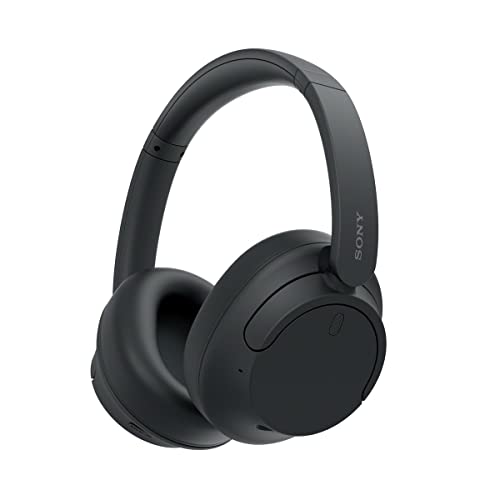
Quality headphones are essential for evaluating AI-generated music. The Sony WH-1000XM5 reveal details in the mix that laptop speakers or earbuds will miss -- the difference between "good enough" and "actually good" often shows up in the low end and spatial characteristics that only quality monitors or headphones can reproduce. And if you're building a library of generated tracks, a Samsung T7 Portable SSD keeps them organized and accessible without filling up your main drive.

The Bigger Picture: AI and the Music Industry
AI music generation sits at a fascinating intersection of technology, creativity, and commerce. The music industry -- already disrupted by streaming -- is grappling with questions that don't have easy answers.
Will AI-generated music flood streaming platforms with low-quality content? Probably -- but the same thing happened with self-published ebooks and user-generated video content. Platforms adapt with curation and algorithms.
Will AI replace professional musicians? For some categories of work -- library music, background tracks, stock audio -- the economic pressure is real. For original artistry, live performance, and emotional connection, human musicians remain irreplaceable.
Will AI become a tool that musicians use rather than compete against? This is the most likely positive outcome. Many professional musicians already use AI for ideation, demo creation, and experimentation. The best AI music tools will become instruments, not replacements.
For more on how AI is reshaping creative fields, check out my guides to AI video generators and AI image generators.
FAQs
Can I use AI-generated music on YouTube without copyright strikes?
Yes, on paid plans. Suno, Udio, Soundraw, and other platforms grant commercial licenses that explicitly cover YouTube use. The free tiers typically don't include commercial rights, so check the specific terms before publishing.
What's the best AI music generator for beginners?
Suno is the easiest to start with -- type a description, get a complete song. Boomy is even simpler if you just want quick background music. Both have free tiers to experiment with.
Is AI-generated music royalty-free?
On paid plans, yes -- you typically get a license that covers commercial use without ongoing royalty payments. However, "royalty-free" means different things on different platforms. Some grant full copyright ownership (AIVA Pro), while others retain some rights. Read the licensing terms carefully.
Can AI generate music in any genre?
Most generators handle popular genres well -- pop, rock, electronic, hip-hop, ambient, jazz, classical. Niche genres and culturally specific music styles tend to produce less accurate results. In my testing, Suno and Udio handle the widest range of genres effectively.
How does AI music compare to stock music libraries?
For background and utility music, AI-generated tracks are increasingly competitive with stock libraries -- often more customizable and significantly cheaper. For featured music where quality is paramount, curated stock libraries still offer more consistent professional quality, though the gap is closing.
The Bottom Line
AI music generation in 2026 is a practical, affordable tool for content creators who need music but don't have the budget or skills for custom composition. The tools are good enough for YouTube background music, podcast intros, game soundtracks, and marketing content -- and they're getting better every quarter.
Suno and Udio lead for full songs with vocals. AIVA leads for cinematic and orchestral work. Soundraw leads for customizable video music. Mubert leads for continuous ambient streams. Boomy leads for simplicity and streaming distribution.
Pick the tool that matches your use case, start with the free tier, and invest in a paid plan when you're ready to go commercial. The cost of AI-generated music is a fraction of what licensing or commissioning used to cost, and the turnaround time is minutes instead of weeks.
What's your experience with AI music? Have you found a tool that produces tracks you're genuinely proud of? Share your favorites (and your best prompts) on X (@wikiwayne) -- I'm always curious to hear what's working for other creators.
Recommended Gear
These are products I personally recommend. Click to view on Amazon.
Sony WH-1000XM5 — Great pick for anyone following this guide.
Samsung T7 Portable SSD 1TB — Great pick for anyone following this guide.
Samsung T7 Shield SSD 1TB — Great pick for anyone following this guide.
 Logitech MX Keys S Wireless — Great pick for anyone following this guide.
 ASUS ProArt PA279CRV 27" 4K — Great pick for anyone following this guide.
 Prompt Engineering for Generative AI — Great pick for anyone following this guide.
This article contains affiliate links. As an Amazon Associate I earn from qualifying purchases. See our full disclosure.
Affiliate Disclosure: As an Amazon Associate I earn from qualifying purchases. This site contains affiliate links.