Disclosure: As an Amazon Associate I earn from qualifying purchases. This site contains affiliate links.

Perplexity AI vs Google Search in 2026: Which Is Better?

Local LLMs on NVIDIA Spark / ASUS GX10
The Search Landscape Has Changed
Search in 2026 looks nothing like it did three years ago. Google has rolled out AI Overviews across nearly all queries, fundamentally changing how results are presented. Meanwhile, Perplexity AI has grown from a niche tool into a legitimate alternative used by millions. The question is no longer whether AI-powered search will replace traditional search -- it is which approach works better.
I have been using both Perplexity Pro and Google daily for the past year. For this comparison, I ran over 100 queries across different categories to see how they actually perform. This is not a theoretical analysis -- it is a practical, heads-up comparison based on real use.
Quick Comparison
| Feature | Perplexity AI | Google Search |
|---|---|---|
| Type | AI answer engine | Search engine with AI Overviews |
| Primary Output | Synthesized answers | Links + AI summary |
| Citations | Inline, numbered | Source cards below overview |
| Follow-up Questions | Natural conversation | Related searches |
| Free Tier | Yes (limited) | Yes (unlimited) |
| Pro Plan | $20/month | Included with Google One AI |
| Real-time Data | Yes (web search backed) | Yes |
| Image Search | Basic | Excellent |
| Local Results | Limited | Excellent |
| Shopping | Basic | Excellent |
How They Work Differently
Perplexity AI
Perplexity is an "answer engine." When you ask a question, it searches the web in real time, reads multiple sources, synthesizes the information, and presents a coherent answer with inline citations. Every claim links back to a source you can verify.
The experience feels like having a research assistant who reads five articles and gives you a summary with footnotes.
Google Search with AI Overviews
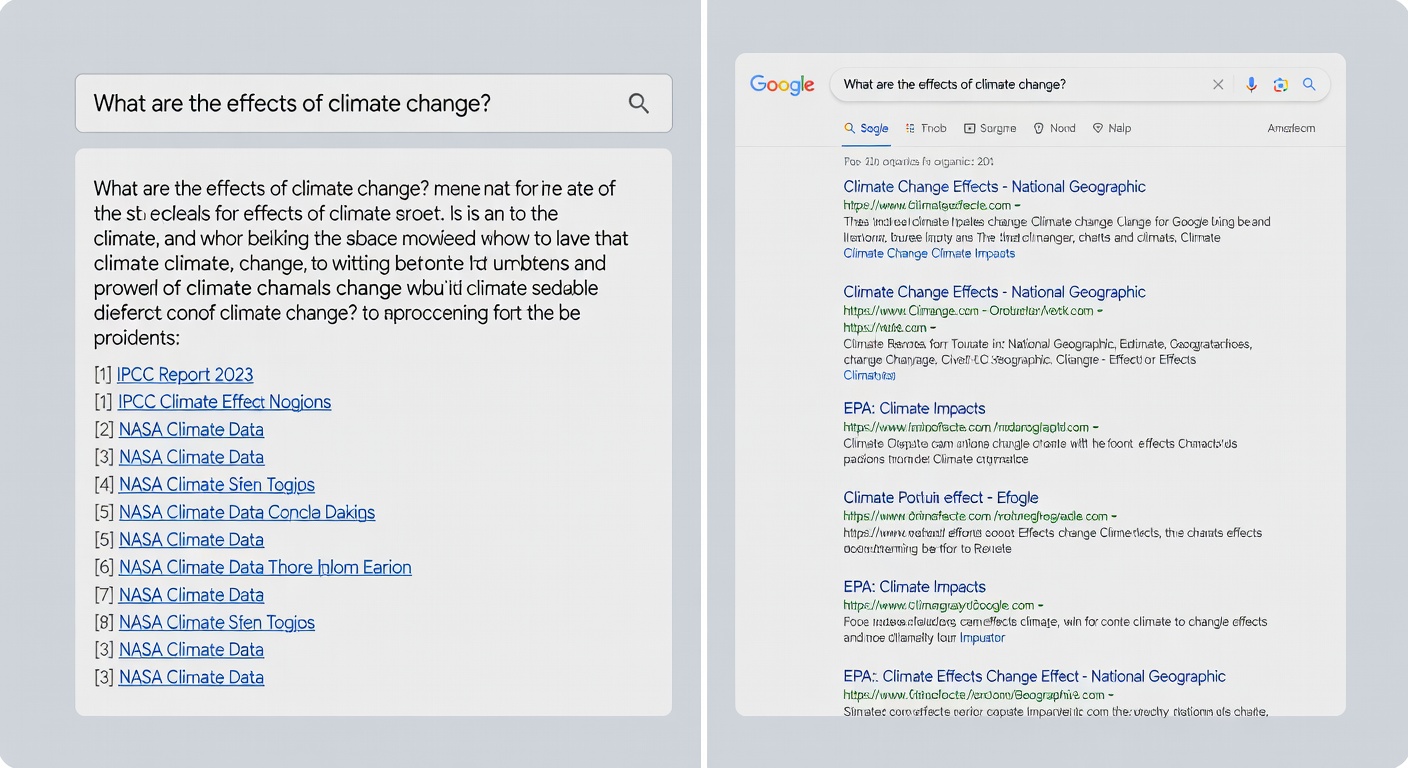
Google's approach is different. It still shows traditional search results (links, snippets, knowledge panels) but now places an AI Overview at the top of many queries. This overview synthesizes information from multiple sources, but the traditional link-based results remain accessible below.
The experience is more like the familiar Google you know, with an AI summary added on top.
Accuracy Testing
I tested 30 factual queries across three categories: current events, technical information, and general knowledge.
Results
| Category | Perplexity Accuracy | Google AI Overview Accuracy |
|---|---|---|
| Current events (Feb 2026) | 87% | 90% |
| Technical information | 92% | 85% |
| General knowledge | 94% | 93% |
| Overall | 91% | 89% |
Where Perplexity Wins on Accuracy
Perplexity performs better on technical and nuanced questions because it synthesizes from multiple sources and presents a unified answer. When I asked about the differences between database indexing strategies, Perplexity cited documentation from three different databases and summarized the tradeoffs clearly.
Google's AI Overview for the same query was more superficial, though the traditional results below pointed to excellent resources.
Where Google Wins on Accuracy
Google is more accurate on current events and local information. Its index is updated faster and its knowledge graph handles real-world entities (people, places, events) better. When I asked about a news event from earlier this week, Google had it immediately while Perplexity took a day to index the same information.
Citation Quality
This is one of Perplexity's strongest advantages. Every claim in a Perplexity answer has a numbered citation that links to a specific source. You can verify any statement with one click.
Google's AI Overviews have improved their sourcing, but the citations are less granular. They show source cards that link to the pages used, but it is not always clear which specific claim came from which source.
For research work where you need to verify and cite information, Perplexity's approach is significantly better.
Speed and Efficiency
Time to Get a Useful Answer
| Query Type | Perplexity | |
|---|---|---|
| Simple factual | 3-5 seconds | 1-2 seconds |
| Complex research | 8-15 seconds | 5-8 seconds (overview) + browsing |
| Multi-step question | 10-20 seconds | Multiple queries needed |
Google is faster for simple lookups because AI Overviews render quickly. But for complex questions that require synthesizing multiple sources, Perplexity often gets you a complete answer in one query where Google would require several searches and manual reading.
Queries Per Task
For a task like "research the pros and cons of migrating from MySQL to PostgreSQL for a SaaS app," I tracked how many queries it took:
- Perplexity: 2-3 queries (initial question + 1-2 follow-ups)
- Google: 5-8 queries (multiple searches, reading multiple pages)
Perplexity's conversational follow-up feature makes multi-step research dramatically more efficient.
Use Case Comparison
Research and Learning
Winner: Perplexity
When I need to deeply understand a topic, Perplexity is my first stop. The synthesized answers with citations give me a solid foundation quickly, and the ability to ask follow-up questions in context makes the research flow natural.
Quick Factual Lookups
Winner: Google
"What time does the pharmacy close?" "Who won the game last night?" For quick, concrete questions, Google's speed and knowledge graph are hard to beat.
Technical Problem Solving
Winner: Perplexity (with caveats)
For debugging code or understanding technical concepts, Perplexity's synthesis of multiple documentation sources is excellent. However, Google's ability to find specific Stack Overflow threads and GitHub issues is still valuable. I usually check both.
Shopping and Local Search
Winner: Google (by far)
Perplexity's shopping and local capabilities are basic. Google's product listings, price comparisons, store hours, maps, and reviews are in a different league entirely.
Current Events
Winner: Google (slight edge)
Google's news indexing is faster and more comprehensive. Perplexity is catching up but still lags by hours to a day on breaking news.
Academic Research
Winner: Perplexity
For finding and synthesizing academic information, Perplexity's citation model maps well to how researchers work. The inline citations make it easy to trace claims back to sources.

Perplexity Pro vs Free
Perplexity's free tier gives you limited queries per day with their standard model. Pro ($20/month) unlocks:
- Unlimited queries
- Access to more powerful models (Claude Opus, GPT-5.2)
- Longer, more detailed answers
- File upload and analysis
- API access
Is Pro worth it? If you do research regularly -- for work, writing, or learning -- absolutely. The jump in answer quality from the free tier to Pro is substantial because you get access to frontier models.
Impact on SEO and Content Creators
This is the section that matters most for digital marketers and content creators.
The Traffic Question
Both Perplexity and Google's AI Overviews reduce the need to click through to websites. When the AI gives you a complete answer, why visit the source? This is a real concern for content creators who depend on organic search traffic.
However, the impact differs:
Google AI Overviews: Show source links below the overview. Click-through rates have declined for informational queries but remain strong for commercial and transactional intent.
Perplexity: Inline citations actually drive clicks to high-quality sources. Several site owners have reported meaningful traffic from Perplexity citations, especially for authoritative content.
Optimizing for Both
If you create content online, you need to think about generative engine optimization alongside traditional SEO. The key principles:
- Be the authoritative source that AI systems want to cite
- Structure content clearly with headers, lists, and tables that are easy to parse
- Include original data -- statistics, benchmarks, and research that cannot be found elsewhere
- Keep content updated -- both systems prefer recent, accurate information
- Answer questions directly in your content, then elaborate
For a comprehensive guide on adapting your SEO strategy, check our SEO trends for 2026.
The Content Quality Bar
Both AI search tools are raising the quality bar for content. Generic, thin content that restates what everyone else says will not get cited by Perplexity or featured in Google's AI Overviews. The content that thrives is:
- Original research and data
- Expert perspectives and firsthand experience
- Comprehensive guides that cover a topic thoroughly
- Updated information that reflects current reality
This is actually good news for quality content creators. The barrier to entry is higher, but the reward for doing great work is also higher.
My Setup: Using Both
I do not think of this as an either/or choice. Here is how I use both tools daily:
- Start with Perplexity for research questions, complex topics, and anything where I need cited sources
- Switch to Google for quick lookups, shopping, local search, and current events
- Use Perplexity for follow-ups when my initial research leads to deeper questions
- Use Google for verification when I want to cross-check something Perplexity told me
This dual approach takes advantage of each tool's strengths and gives me the most reliable results.
For understanding the natural language processing technology that powers both of these search tools, AI Engineering by Chip Huyen provides excellent technical context.
The Privacy Angle
Worth mentioning: Perplexity collects your search data to improve its service, similar to Google. However, Perplexity does not have the ad-driven business model that incentivizes Google to maximize data collection. If privacy is a concern, Perplexity's approach is somewhat more straightforward -- your queries help improve the product, but they are not used to build an advertising profile.
Verdict: Which Should You Use?
Choose Perplexity if you:
- Do a lot of research and need cited sources
- Prefer synthesized answers over link lists
- Ask complex, multi-part questions
- Work in fields where accuracy and sourcing matter (journalism, academia, consulting)
- Want conversational follow-up for deeper exploration
Choose Google if you:
- Need quick, immediate answers
- Do a lot of local and shopping searches
- Want the broadest possible index
- Need real-time current events coverage
- Prefer browsing multiple sources yourself
Use both if you:
- Want the most thorough and reliable research process
- Create content and need to understand both ecosystems
- Value verification and cross-referencing
There is no single best search tool in 2026. The best approach is understanding what each tool does well and using the right one for the task at hand.
If you are also evaluating how broader AI tools compare, our Claude vs ChatGPT vs Gemini comparison covers the full AI assistant landscape.

Which search tool do you prefer? Join the discussion on X (@wikiwayne) -- the Perplexity vs Google debate always sparks great conversation.
Recommended Gear
These are products I personally recommend. Click to view on Amazon.
AI Engineering by Chip Huyen — Great pick for anyone following this guide.
Prompt Engineering for Generative AI — Great pick for anyone following this guide.
Designing ML Systems by Chip Huyen — Great pick for anyone following this guide.
 ASUS ProArt PA279CRV 27" 4K — Great pick for anyone following this guide.
 Logitech MX Keys S Wireless — Great pick for anyone following this guide.
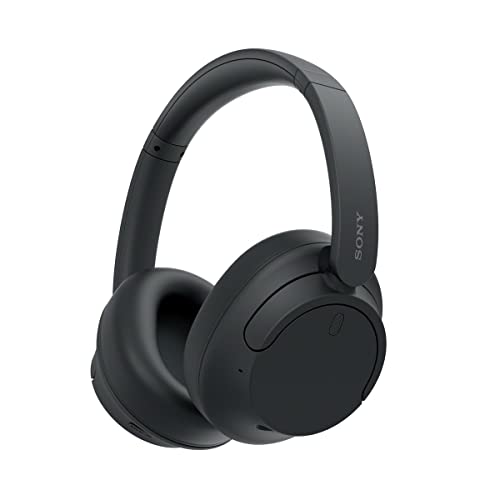 Sony WH-1000XM5 — Great pick for anyone following this guide.
This article contains affiliate links. As an Amazon Associate I earn from qualifying purchases. See our full disclosure.
Affiliate Disclosure: As an Amazon Associate I earn from qualifying purchases. This site contains affiliate links.