Disclosure: As an Amazon Associate I earn from qualifying purchases. This site contains affiliate links.

OpenClaw for Content Creators: Automate Your Workflow

Local LLMs on NVIDIA Spark / ASUS GX10
The Content Creator's Time Problem
If you are a content creator in 2026, you know the struggle. You are expected to publish blog posts, film YouTube videos, record podcasts, maintain a newsletter, post on five different social platforms, respond to comments, and somehow find time to actually create the content people care about.
I run WikiWayne as a one-person operation, and I was drowning in the administrative side of content creation until I set up OpenClaw to handle the repetitive stuff. In this guide, I will show you exactly how I use OpenClaw to automate the parts of content creation that do not require a human touch, so I can focus on the parts that do.
If you are not yet familiar with OpenClaw, start with our complete introduction and installation guide.

What Can OpenClaw Actually Automate?
Let me be upfront: OpenClaw is not going to write your content for you. Or rather, it can, but you should not let it. Your voice, perspective, and expertise are what make your content valuable. What OpenClaw excels at is everything around the content -- the research, distribution, repurposing, and administrative tasks that eat up hours every week.
Here is what I have automated:
| Task | Time Before | Time After | Savings |
|---|---|---|---|
| Topic research & outline | 2 hours | 20 min | 83% |
| Social media posting | 45 min/day | 5 min/day | 89% |
| Newsletter preparation | 1.5 hours | 15 min | 83% |
| Content repurposing | 3 hours | 30 min | 83% |
| SEO keyword research | 1 hour | 10 min | 83% |
| Comment/engagement triage | 30 min/day | 5 min/day | 83% |
That adds up to roughly 25 hours per week saved. Those hours now go into writing, filming, and actually thinking about what I want to say.
Setting Up OpenClaw for Content Workflows
Essential Skills for Creators
Install these ClawHub skills to get started:
# Research and writing
openclaw skill install content-researcher
openclaw skill install seo-analyzer
openclaw skill install outline-generator

# Distribution
openclaw skill install social-poster
openclaw skill install newsletter-prep
openclaw skill install content-repurposer

# Analytics
openclaw skill install analytics-digest
openclaw skill install trend-tracker
Configuration for Content Workflows
Here is my creator-focused OpenClaw config:
# ~/.openclaw/config.yaml
llm:
  provider: anthropic
  model: claude-sonnet-4-5  # Good balance of quality and cost
  routing:
    research: claude-opus-4-6    # Best reasoning for research
    social_media: claude-haiku-4 # Fast and cheap for short posts

workflows:
  content_pipeline:
    schedule: "0 6 * * *"  # Run daily at 6 AM
    steps:
      - skill: trend-tracker
        action: check_trending_topics
      - skill: analytics-digest
        action: daily_summary
      - skill: social-poster
        action: schedule_posts
Workflow 1: Automated Research and Outlining
This is where I get the most value. When I decide on a topic, I used to spend two hours gathering information, checking competitors, and building an outline. Now I tell OpenClaw to do the legwork:
openclaw run research-pipeline \
  --topic "AI agents for small business" \
  --depth comprehensive \
  --competitors 5 \
  --output outline
The agent will:
- Search for recent articles on the topic
- Analyze the top 5 competing articles
- Identify gaps in existing coverage
- Pull relevant statistics and data points
- Generate a structured outline with suggested headings
- Flag potential affiliate product opportunities
I then take that outline and rewrite it in my voice, adding my own experience and opinions. The research that used to take two hours now takes 20 minutes of review and editing.
Sample Research Output
## Research Report: AI Agents for Small Business

### Key Findings:
- 67% of small businesses plan to adopt AI tools by end of 2026
- Most content focuses on enterprise; gap for small business perspective
- Top competitor articles average 2,400 words
- Missing angle: cost comparison for businesses under 10 employees

### Suggested Outline:
1. Introduction: The small business AI opportunity
2. What AI agents can do for small businesses
3. Top 5 AI agent platforms compared
4. Cost breakdown: What to expect
5. Getting started in under an hour
6. Common mistakes to avoid

### Affiliate Opportunities:
- AI Engineering book (relevant to tech-savvy business owners)
- Raspberry Pi for self-hosting
- Productivity hardware
Workflow 2: Social Media Automation
This is the workflow that saves me the most daily time. I create content once, and OpenClaw distributes it across platforms with appropriate formatting for each.
# ~/.openclaw/workflows/social-distribution.yaml
name: social-distribution
trigger: on_publish  # Runs when I publish a new article

steps:
  - skill: content-repurposer
    action: extract_key_points
    input:
      source: "${published_url}"
      count: 5

  - skill: social-poster
    action: create_thread
    input:
      platform: twitter
      key_points: "${previous.key_points}"
      style: "conversational, include relevant stats"
      hashtags: auto

  - skill: social-poster
    action: create_post
    input:
      platform: linkedin
      key_points: "${previous.key_points}"
      style: "professional, thought-leadership"

  - skill: social-poster
    action: schedule
    input:
      twitter_thread: "${steps[1].output}"
      linkedin_post: "${steps[2].output}"
      schedule:
        twitter: "immediate"
        linkedin: "+2 hours"
The important thing here is that OpenClaw creates drafts that I review before they go out. I have it set to require_approval: true for all social posts, so nothing gets published without my eyes on it.
Workflow 3: Newsletter Preparation
Every Tuesday I send a newsletter to my subscribers. Preparing it used to take 90 minutes. Now OpenClaw does the heavy lifting:
name: weekly-newsletter
schedule: "0 7 * * MON"  # Monday morning prep

steps:
  - skill: analytics-digest
    action: weekly_top_content
    input:
      period: "last_7_days"
      metrics: ["pageviews", "engagement", "shares"]

  - skill: trend-tracker
    action: weekly_roundup
    input:
      topics: ["ai-tools", "tech-news", "digital-marketing"]
      max_items: 5

  - skill: newsletter-prep
    action: draft_newsletter
    input:
      top_content: "${steps[0].output}"
      industry_news: "${steps[1].output}"
      template: "weekly-digest"
      cta: "Check out our latest guide on OpenClaw"
On Monday morning, I wake up to a draft newsletter sitting in my inbox. I spend 15 minutes tweaking it, add a personal note at the top, and schedule it for Tuesday. That is it.
Workflow 4: Content Repurposing
One piece of content should become many. A blog post can become a Twitter thread, a LinkedIn article, a YouTube script outline, a podcast talking point, and several short-form video scripts. OpenClaw handles this transformation:
openclaw run repurpose \
  --source "/blog/openclaw-claude-integration" \
  --formats "twitter-thread,linkedin,youtube-outline,shorts-scripts" \
  --tone "match-original" \
  --output ~/content-queue/
What Gets Generated
From a single 2,000-word blog post, I typically get:
- 1 Twitter/X thread (8-12 tweets)
- 1 LinkedIn post (300-400 words, professional tone)
- 1 YouTube video outline (intro, 5-7 sections, CTA)
- 3 short-form video scripts (30-60 seconds each)
- 5 pull quotes formatted for social media graphics
All of these need editing, but starting from a draft is infinitely faster than starting from a blank page.
Workflow 5: SEO and Keyword Research
Before writing any article, I have OpenClaw analyze the keyword landscape:
openclaw run seo-research \
  --seed-keyword "best ai tools 2026" \
  --intent informational \
  --competition-analysis true
The agent returns:
- Primary and secondary keyword suggestions
- Search volume estimates
- Competition difficulty scores
- Content gap analysis
- Suggested heading structure for SEO
- Internal linking opportunities
This is particularly valuable for generative engine optimization, where you need to think about how AI search engines parse your content, not just traditional Google rankings.
Workflow 6: Engagement and Comment Triage
When you publish content across multiple platforms, the comments and messages pile up fast. OpenClaw helps me stay on top of engagement:
name: engagement-triage
schedule: "0 */4 * * *"  # Every 4 hours

steps:
  - skill: engagement-monitor
    action: collect_mentions
    input:
      platforms: ["twitter", "youtube", "blog"]

  - skill: engagement-monitor
    action: categorize
    input:
      mentions: "${previous.mentions}"
      categories:
        urgent: "questions, complaints, collaboration requests"
        standard: "compliments, shares, general comments"
        skip: "spam, off-topic"

  - skill: notification
    action: send
    input:
      urgent: "${steps[1].output.urgent}"
      channel: "email"
I get an email summary every four hours with the mentions that actually need my attention. The spam and generic comments get filed away. I probably miss fewer genuine interactions now than when I was trying to manually check everything.
Hardware and Setup Tips for Creators
Content creation involves a lot of screen time, so invest in your workspace. I write on a Logitech MX Keys S which has been my favorite keyboard for long writing sessions. The low-profile keys and quiet switches mean I can write for hours without fatigue.
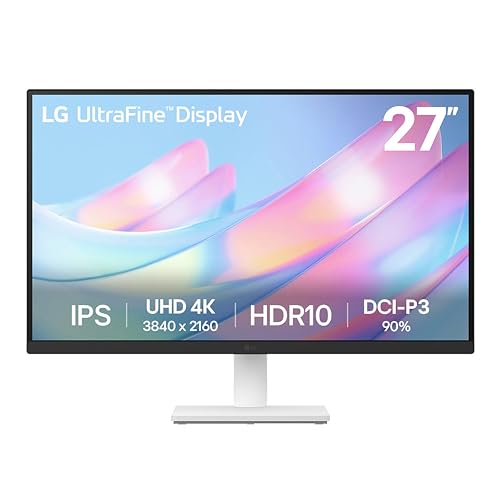
For reviewing content across platforms, a good monitor makes a big difference. A 4K display lets you comfortably have your CMS, social media dashboards, and analytics open simultaneously.
And if you are going to run OpenClaw locally, a fast SSD keeps everything responsive. I use a Samsung T7 for backing up my content library and OpenClaw data.
Cost Breakdown for Content Creators
Here is what my OpenClaw content automation costs per month:
| Component | Monthly Cost |
|---|---|
| Claude API (Sonnet default) | ~$35 |
| Claude API (Opus for research) | ~$15 |
| OpenClaw hosting (self-hosted) | $0 |
| ClawHub premium skills (2) | $10 |
| Total | ~$60 |
For comparison, hiring a virtual assistant to do even half of these tasks would cost $500-1,000 per month. The ROI is very clear.
What I Do NOT Automate
It is worth being explicit about what I keep in my own hands:
- Writing the actual content: My voice is my brand
- Final review of everything: OpenClaw drafts, I approve
- Strategic decisions: What topics to cover, what direction to take
- Personal responses: Genuine engagement with my audience
- Creative direction: Thumbnails, branding, visual identity
OpenClaw is a force multiplier, not a replacement. The creators who will thrive in the AI era are the ones who use these tools to amplify their unique perspective, not eliminate it.
For more on how AI is reshaping content creation, the landscape is moving fast and staying informed matters.
Getting Started Today
If you are a content creator looking to reclaim your time, here is my suggested path:
- Install OpenClaw using our installation guide
- Set up Claude as your backend with our integration guide
- Start with one workflow -- I recommend social media distribution
- Gradually add more as you get comfortable with the system
- Build custom skills for your specific needs
The learning curve is about a weekend to get the basics running, and another week to fine-tune your workflows. After that, you are saving hours every single day.
If you want to understand the prompting techniques that make these automations work well, Prompt Engineering for LLMs is an excellent practical guide.
Using OpenClaw for content creation? I want to hear about your setup. Share your workflow on X (@wikiwayne) and tag me -- I feature the best community setups in my newsletter.
Recommended Gear
These are products I personally recommend. Click to view on Amazon.
Logitech MX Keys S Wireless — Great pick for anyone following this guide.
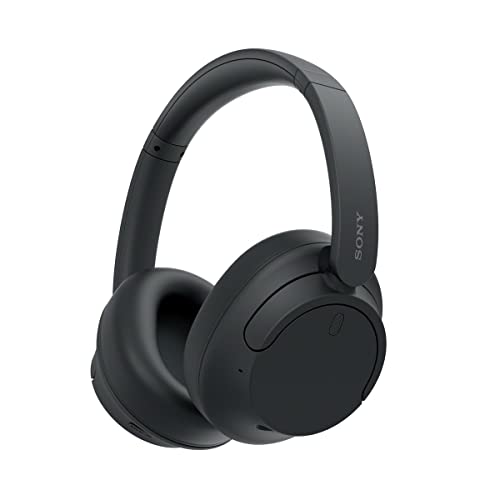
Sony WH-1000XM5 — Great pick for anyone following this guide.
LG 27UN850-W 4K UHD — Great pick for anyone following this guide.
 Samsung T7 Shield SSD 1TB — Great pick for anyone following this guide.
 UGREEN USB-C Hub 6-in-1 — Great pick for anyone following this guide.
 AI Engineering by Chip Huyen — Great pick for anyone following this guide.
This article contains affiliate links. As an Amazon Associate I earn from qualifying purchases. See our full disclosure.
Affiliate Disclosure: As an Amazon Associate I earn from qualifying purchases. This site contains affiliate links.