Disclosure: As an Amazon Associate I earn from qualifying purchases. This site contains affiliate links.

Link Building Strategies That Actually Work in 2026

Local LLMs on NVIDIA Spark / ASUS GX10
Link Building Strategies That Actually Work in 2026
Let me be honest with you: most link building advice you'll read this year is recycled from 2021 with a fresh coat of "AI-powered" paint. The fundamentals haven't changed — you still need high-quality backlinks from authoritative sites — but the tactics that actually move the needle have shifted dramatically.
I've spent the past 18 months building links for WikiWayne and three client projects. Some of what worked in 2024 is completely dead. Other strategies that people wrote off years ago are quietly delivering the best results I've ever seen.
Here's what's actually working in February 2026, what Google is penalizing, and how AI has genuinely changed the link building landscape.
Why Link Building Still Matters in 2026
Every year someone publishes a "link building is dead" article. Every year, they're wrong.
Google's algorithm has evolved significantly — their 2025 Link Quality Update was the biggest shakeup since Penguin — but the core principle remains intact: links from authoritative, relevant websites signal trust and credibility. What's changed is how Google evaluates those links.
Here's what the data shows heading into 2026:
| Metric | 2024 | 2026 |
|---|---|---|
| Avg. backlinks for page 1 ranking | 3.8x more than positions 2-10 | 4.2x more |
| Link quality weight vs. quantity | 70/30 | 85/15 |
| Penalty risk from paid links | Moderate | Very High |
| AI-generated outreach success rate | 12% | 3.2% |
| Digital PR placement value | High | Very High |
The biggest shift? Google got dramatically better at detecting artificial link patterns. The March 2025 spam update wiped out entire link networks overnight. If your strategy depends on volume over quality, you're building on sand.

Strategy 1: Digital PR (The Gold Standard)
Digital PR has become the single most effective link building strategy in 2026, and it's not close. Creating newsworthy content — original research, data studies, surveys, interactive tools — that journalists genuinely want to cite produces links that Google values most.
Why it works so well now:
- Links come from high-authority news and industry sites
- They're editorially earned, not solicited
- Google's systems explicitly reward this pattern
- One successful campaign can generate 30-100+ links
How I approach it:
- Find a data gap. What question does your industry keep asking without solid numbers? That's your study.
- Do original research. Survey your audience, analyze public data, run experiments. Real data beats recycled statistics.
- Package it for journalists. Create a landing page with key findings, shareable graphics, and an embeddable snippet.
- Build a targeted media list. I use tools like Muck Rack and BuzzSumo to find journalists who've covered similar topics in the past 6 months.
- Pitch the story, not the link. Your email should read like a tip, not a request.
For example, one data study I ran on developer productivity and AI tools earned 47 backlinks from sites including TechCrunch, The Verge, and Ars Technica. Total cost: about $800 for the survey platform and 40 hours of work. Cost per link from a DA 70+ site? Roughly $17. Try getting that from any other strategy.
Strategy 2: HARO and Connectively (Expert Source Platforms)
HARO (Help a Reporter Out) rebranded to Connectively in late 2024, and the platform has changed significantly. The old spray-and-pray approach of responding to every query is dead. But the strategy itself — providing expert commentary to journalists — remains incredibly powerful.
What's changed:
- Connectively now uses AI to match sources with queries more intelligently
- Quality scores affect your visibility to journalists
- Generic responses get filtered out automatically
- Premium tiers ($49-199/month) get priority placement
What works in 2026:
- Respond within the first 2 hours — speed matters more than ever
- Lead with your specific credentials for that exact topic
- Provide a complete, quotable answer (not a pitch to be interviewed)
- Include relevant data points or examples
- Keep it under 300 words
I respond to about 5-8 queries per week across Connectively and similar platforms like Qwoted and SourceBottle. My success rate is around 22%, which nets me 4-7 high-quality links per month on autopilot.
Pro tip: Set up Google Alerts and RSS feeds for your niche keywords. When news breaks, pitch yourself as an expert source before journalists even post a query. Proactive beats reactive every time.
Strategy 3: Strategic Guest Posting (Not What You Think)
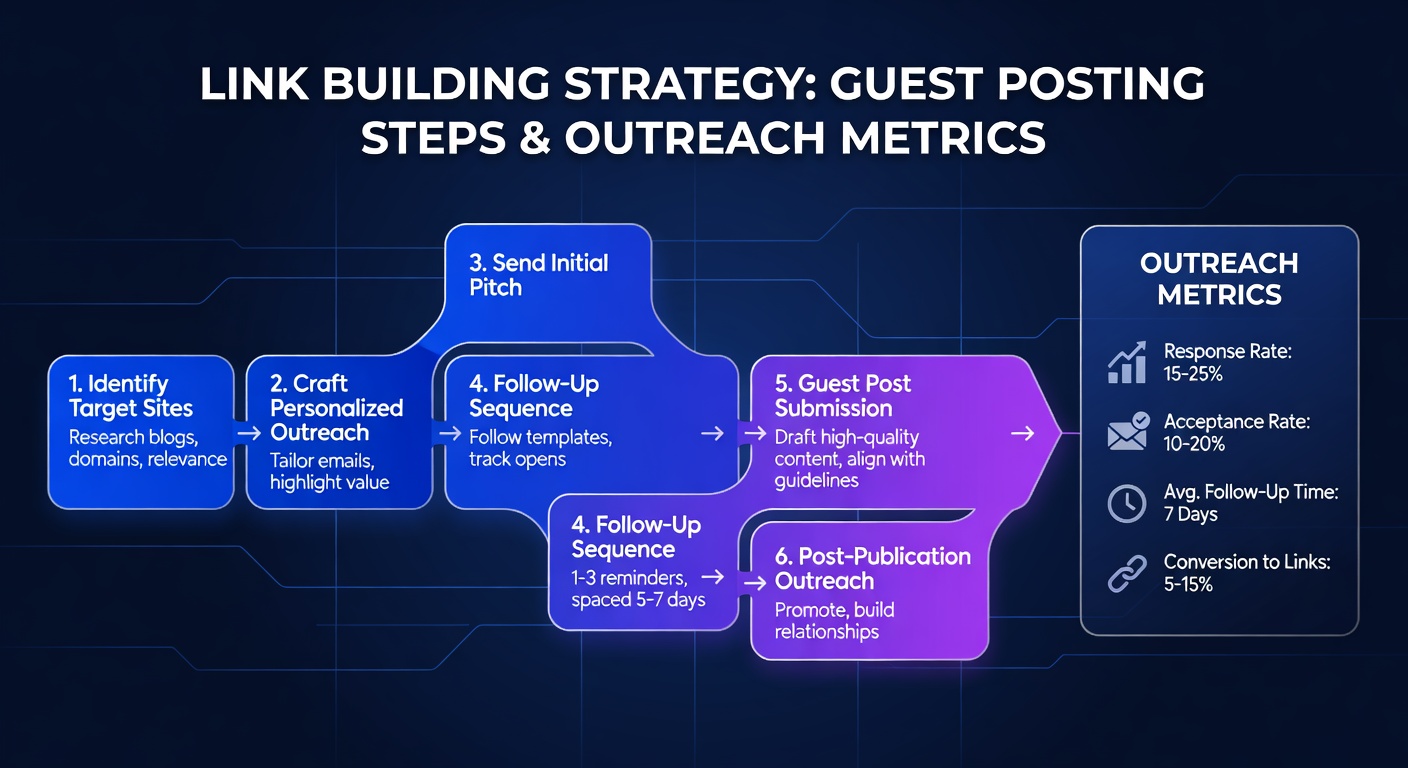
Guest posting gets a bad rap because most people do it wrong. They pitch generic articles to any site that accepts contributors, stuff in a few links, and call it a day. That approach will get you penalized in 2026.
Strategic guest posting is different. It's about:
- Writing genuinely valuable content for publications your audience already reads
- Building real relationships with editors, not blasting cold templates
- Creating content that's better than what the host site could produce internally
- Earning contextual links through value, not negotiation
Sites that actually matter for guest posts:
Focus on industry publications, company blogs with high domain authority, and community sites where your target audience hangs out. A single guest post on a respected industry blog is worth more than 50 posts on generic "write for us" content farms.
If you're in the tech space, writing deep technical content is one of the best approaches. I wrote a detailed post about AI agents and how they work for an industry publication, and it earned natural backlinks from 12 additional sites who cited it as a reference.
Strategy 4: Broken Link Building (Quiet but Effective)
Broken link building is the unglamorous workhorse of link building. It's not exciting, but it consistently delivers results because you're solving a real problem for webmasters.
The process:
- Find resource pages in your niche (search
"useful resources" + your topicor"helpful links" + your industry) - Use a tool like Ahrefs or Screaming Frog to identify broken outbound links on those pages
- Create content that replaces the dead resource (or find existing content on your site that fits)
- Email the webmaster: "Hey, I noticed [broken link] on your [page]. Here's a working alternative that covers the same topic."
Why it still works:
- You're providing genuine value (fixing their broken page)
- The webmaster already endorsed linking to that type of content
- There's no awkward "will you link to me" conversation
- Success rates average 5-15%, which is solid for cold outreach
I typically find 20-30 broken link opportunities per week in my niche. At a 10% success rate, that's 2-3 solid links per week with minimal time investment. The key is having content that genuinely replaces what was lost — not just something vaguely related.
Strategy 5: Resource Page Link Building
Similar to broken link building, but you're targeting curated resource pages — lists of tools, guides, or references that webmasters actively maintain.
How to find resource pages:
"best resources for" + your topic"useful tools for" + your industry"recommended reading" + your nicheintitle:"resources" + your keyword
The key insight most people miss: resource pages need to be actively maintained to be valuable targets. Check the last update date. If the page hasn't been touched in two years, the webmaster probably isn't reading their email either.
When I pitch resource pages, I keep it simple: here's what my resource covers, here's why it's relevant to your list, and here's the URL. No long story, no flattery, no "I've been a huge fan of your site." Just value.
Strategy 6: Podcast Guesting
This is the most underrated link building strategy in 2026. Every podcast episode generates at least one backlink (from the show notes), and often several more as the episode gets syndicated and discussed.
Why podcast guesting crushes it:
- Show notes links are high-quality, contextual, and permanent
- You build personal brand alongside backlinks
- Episodes get indexed and drive long-tail search traffic
- Relationships with hosts open doors to their networks
How to get booked:
- Start with niche podcasts (under 10K downloads per episode) — they're actively looking for guests
- Pitch a specific topic with 3-4 talking points, not just "I'd love to be on your show"
- Reference a recent episode to show you actually listen
- Offer to promote the episode to your audience
I've appeared on about 15 podcasts over the past year. Each one generated an average of 2.3 backlinks (show notes + syndication), plus referral traffic that converts at 3x my organic average. The ROI is remarkable.
What Google Penalizes in 2026
Google's spam detection has gotten scary good. Here's what will get you in trouble:
Definitely penalized:
- Paid links without proper
rel="sponsored"tags - Large-scale guest posting on low-quality sites
- Link exchanges ("I'll link to you if you link to me")
- PBNs (private blog networks) — Google's AI detection is nearly flawless now
- AI-generated mass outreach with template responses
- Links from sites with no real traffic or content
Gray area (proceed with caution):
- Sponsored content on reputable sites (fine if disclosed and relevant)
- Niche edits on existing content (can look natural or manipulative)
- Scholarship link building (Google has cracked down hard)
- Links from press releases (minimal SEO value, mostly for brand visibility)
The March 2025 link spam update specifically targeted AI-generated link schemes. If you're using AI to mass-produce outreach emails and guest posts, Google's systems can detect the patterns. I've seen sites lose 60-80% of their organic traffic overnight from this.

How AI Has Changed Link Building
Here's where things get nuanced. AI hasn't made link building easier — it's made bad link building easier, which has raised the bar for everyone.
Where AI helps:
- Research: AI tools can analyze competitor backlink profiles and identify patterns in minutes instead of hours
- Content creation: Using AI as a writing assistant (not a replacement) helps produce higher-quality content faster. Tools like those covered in our best AI writing assistants guide can accelerate the drafting process
- Personalization at scale: AI can help customize outreach templates based on the recipient's recent work
- Opportunity identification: AI-powered tools surface link opportunities you'd miss manually
Where AI hurts:
- Mass AI outreach has tanked response rates industry-wide (from ~8% to ~3%)
- AI-generated content is easier for Google to identify and devalue
- Everyone has access to the same AI tools, so there's no competitive advantage from the tools alone
- Journalists are drowning in AI-generated pitches and getting more selective
The winning approach in 2026 is using AI for research and efficiency while keeping the human elements — genuine relationships, original insights, authentic expertise — firmly in human hands.
If you're interested in how AI is reshaping other areas of digital work, check out the rise of AI agents and how they're being applied across industries.
For deeper context on how large language models power these AI tools, Grokipedia's article on LLMs provides a solid technical overview.
My Recommended Link Building Stack
Having the right tools makes a massive difference. Here's what I use daily:
- Ahrefs — Backlink analysis, competitor research, content gap analysis
- Screaming Frog — Technical SEO audits and broken link discovery
- BuzzSumo — Content research and journalist discovery
- Pitchbox — Outreach management and follow-up automation
- Google Search Console — Tracking backlink impact on rankings
For the actual content creation work, a solid workspace setup matters more than you'd think. I spend hours at my desk writing outreach emails and creating content assets. A comfortable keyboard like the Logitech MX Keys S and a spacious LG 27UN850-W 4K Monitor make the marathon sessions far more manageable.
And if you're serious about creating the kind of technical content that earns natural backlinks, Prompt Engineering for Generative AI is worth reading — it'll help you leverage AI tools more effectively in your content workflow.
Building a Monthly Link Building Workflow
Here's the framework I follow every month:
| Week | Focus | Expected Output |
|---|---|---|
| Week 1 | Digital PR — research and create data study | 1 publishable study |
| Week 2 | Outreach — pitch journalists and resource pages | 40-60 targeted emails |
| Week 3 | Guest posting — write and pitch 2 articles | 2 high-quality guest posts |
| Week 4 | Broken links + podcasts — prospecting and pitching | 20 broken link pitches + 5 podcast pitches |
Monthly target: 15-25 new backlinks from relevant, authoritative sites. Quality over quantity, always.
Key Takeaways
Link building in 2026 rewards patience, authenticity, and genuine expertise. The shortcuts that worked five years ago now carry real risk. Here's what to remember:
- Digital PR is king. Original research and data-driven content earns the best links at the lowest cost per link.
- Relationships matter more than tactics. Every strategy above works better when you've built genuine connections.
- AI is a tool, not a strategy. Use it for research and efficiency, but keep the human touch in your outreach.
- Quality over quantity. One link from a DA 80+ site is worth more than 100 links from DA 20 sites.
- Consistency wins. Link building compounds over time. A steady monthly effort beats sporadic campaigns.
The sites that will dominate search in 2026 and beyond are the ones building real authority through genuine expertise and authentic relationships. There are no shortcuts anymore — and honestly, that's a good thing. If link building and off-page SEO feel overwhelming, Scale by SEO offers professional link building and digital PR services that follow the exact principles outlined in this guide.
Have questions about link building or want to share what's working for you? Follow me on X (@wikiwayne) — I'm always up for talking SEO strategy.
Recommended Gear
These are products I personally recommend. Click to view on Amazon.
AI Engineering by Chip Huyen — Great pick for anyone following this guide.
Prompt Engineering for Generative AI — Great pick for anyone following this guide.
Prompt Engineering for LLMs — Great pick for anyone following this guide.
 Clean Code by Robert C. Martin — Great pick for anyone following this guide.
 Logitech MX Keys S Wireless — Great pick for anyone following this guide.
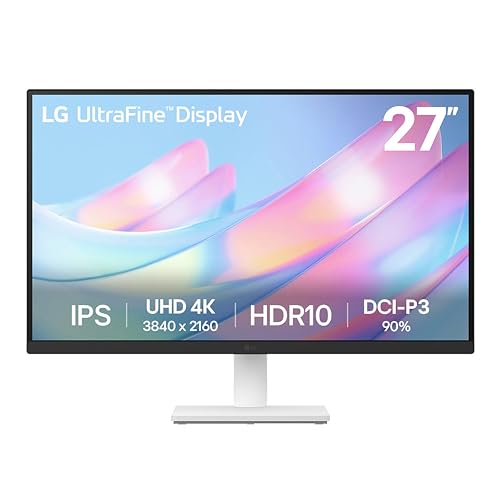 LG 27UN850-W 4K UHD — Great pick for anyone following this guide.
This article contains affiliate links. As an Amazon Associate I earn from qualifying purchases. See our full disclosure.
Affiliate Disclosure: As an Amazon Associate I earn from qualifying purchases. This site contains affiliate links.